
GHRH analog reference material
Tesamorelin supplied as lyophilized reference material for in-vitro receptor work. Laboratory research use only.
- Compounds
- 1
- Purity
- 99.89%
- Certificates
- 1
- Method
- LCMS-UV
1 compound in this line
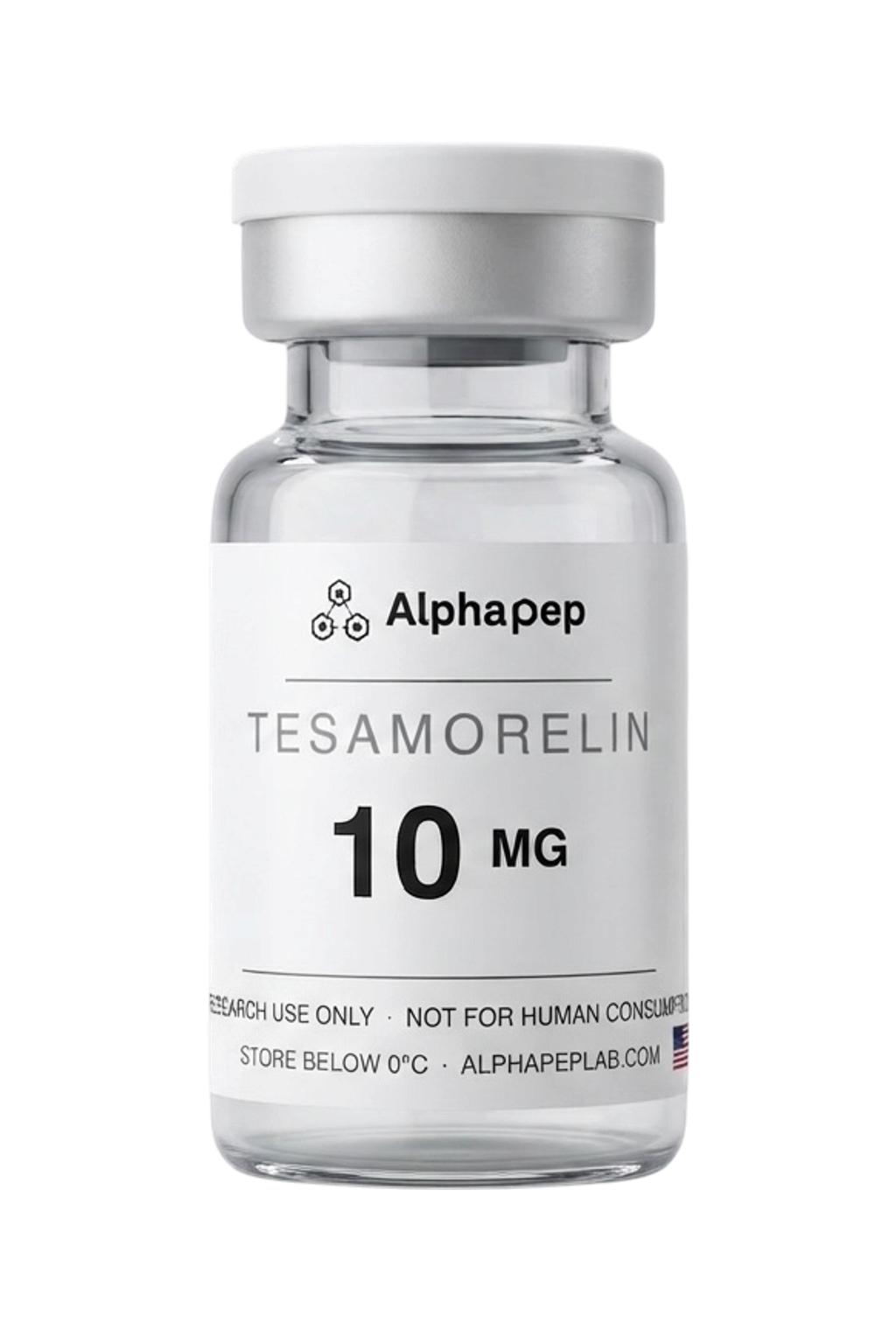
What the molecule is
Tesamorelin is a synthetic analog of growth-hormone-releasing hormone: a peptide of forty-four amino acids carrying an N-terminal modification that distinguishes it from the native sequence. It is supplied as a characterised reference standard for in-vitro work on GHRH receptor pharmacology, and Alphapep offers it for no other purpose.
- Formula
- C221H366N72O67S
- Mass
- 5,135.8 Da
- Supplied as
- 10mg
Analytical specification
Each lot is assayed by an independent laboratory by LCMS-UV, which reports purity as UV peak-area percentage and confirms identity by mass. Those are separate results: a sample can be highly pure and still be the wrong molecule, which is why both appear on the certificate. The certificate is issued against the lot in the vial.
The family, as the databases record it
The compound in this line belongs to a family that InterPro and UniProt recognise: the growth-hormone-releasing-hormone analogues, separated at sub-entry level within the wider glucagon-secretin superfamily. The peptide portion reproduces the 44-residue mature sequence carried inside the 108-residue precursor recorded under UniProt P01286.
What separates the catalogued compound from the native sequence
Two synthetic modifications, and both are compositional rather than incidental. The alpha-amine of the first residue is acylated with a trans-3-hexenoyl group, an unsaturated six-carbon unit contributing C6H8O, and the C-terminus is presented as an amide rather than a free acid. Building the formula from the native chain and applying both modifications reproduces the deposited composition exactly, which confirms the substitution pattern independently of the sequence assignment.
- Compounds
- 1
- Assay method
- LCMS-UV
- Laboratory
- ACS Peptide Testing Labs
- Certificate date
- 2026-07-28
- Appearance
- White powder
The boundary against its neighbours
Length and that acyl group draw it. The 29-residue N-terminal analogues of the same hormone family are separated by more than 1700 Da in mass and carry no acyl substituent at all, so the two are never in question by mass spectrometry.
Percentage of total UV peak area attributable to the target compound.
Measured mass of the principal peak against the calculated mass for the sequence.
Each certificate is issued against a specific accession, not against the compound.