
Mitochondrial peptide and coenzyme reference materials
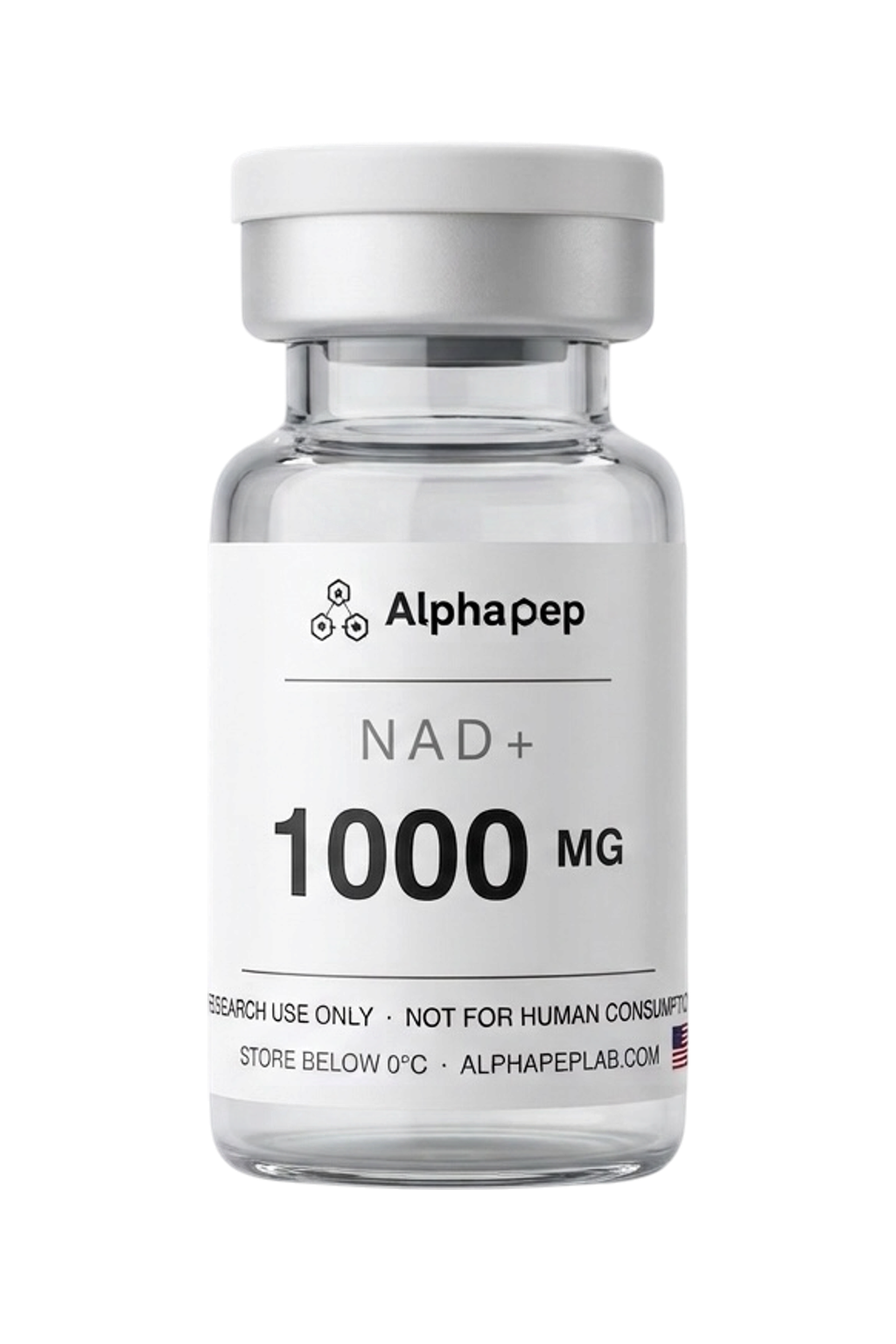
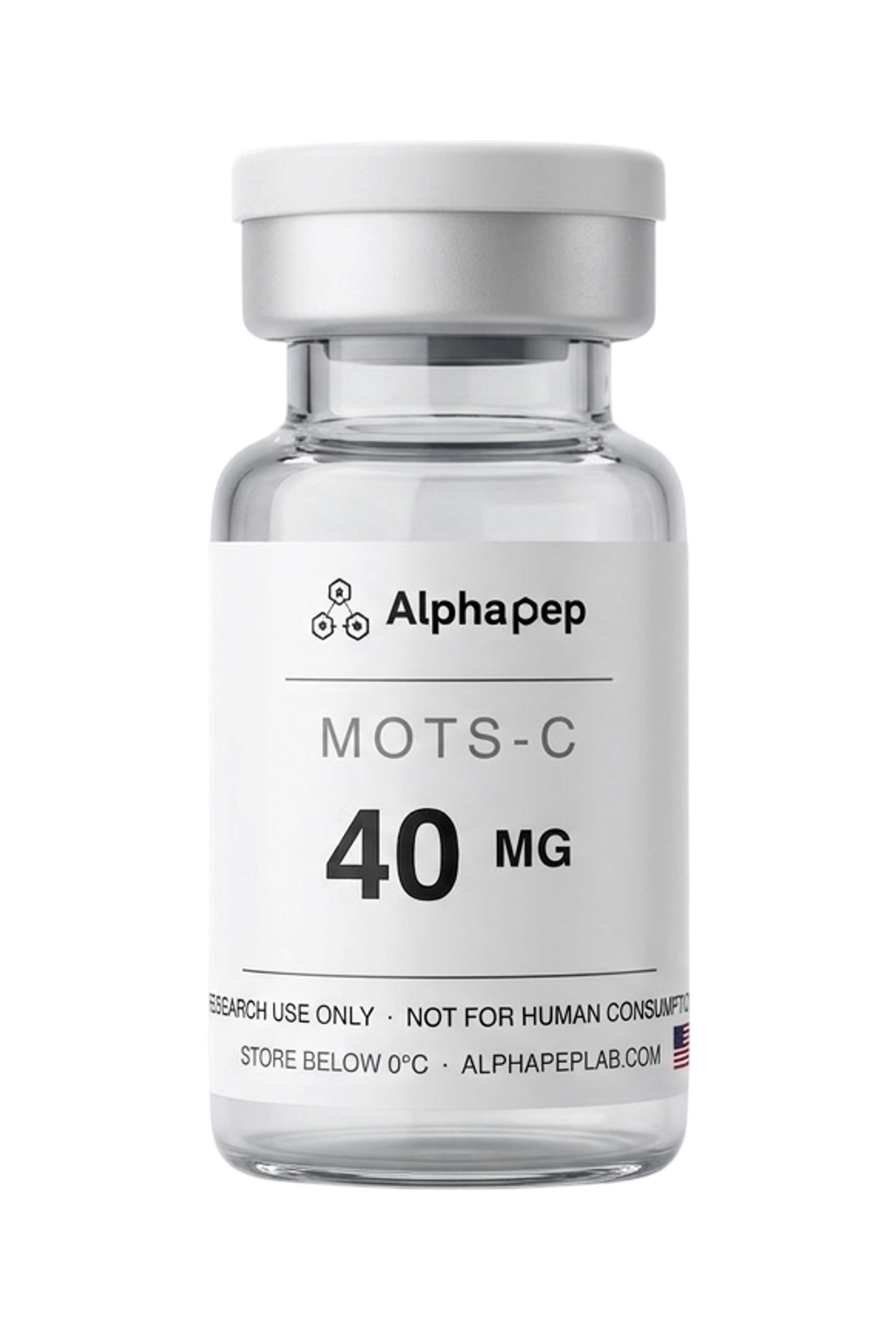
MOTS-c and NAD+ supplied as lyophilized reference material for in-vitro biochemistry. Laboratory research use only.
- Compounds
- 2
- Highest lot
- 99.91%
- Certificates
- 2
- Method
- LCMS-UV
2 compounds in this line
What these molecules are
MOTS-c is a peptide of sixteen amino acids encoded within the mitochondrial genome rather than the nuclear one, which is what places it in the mitochondrial-derived peptide family. NAD+ is nicotinamide adenine dinucleotide, a dinucleotide coenzyme that participates in redox chemistry as an electron carrier. Both are supplied as characterised reference standards for in-vitro biochemical work and for no other purpose.
- Formula
- C21H27N7O14P2
- Mass
- 663.4 Da
- Supplied as
- 1000mg
- Formula
- C101H152N28O22S2
- Mass
- 2,174.6 Da
- Supplied as
- 40mg
Analytical specification
Lots are assayed by an independent laboratory by LCMS-UV. Purity is reported as UV peak-area percentage and identity is confirmed by mass against the expected value. NAD+ is specified at ≥98% and the peptides at ≥99%; the figure that applies to a given vial is the one printed on that lot certificate, which is published here.
Two different classes of compound
This line groups its contents by research context rather than by structure, and the distinction matters when reading their certificates. The compounds catalogued here share no family, no fold and no sequence relationship, because one of them is a peptide and the other is not.
Checked separately for each compound rather than for the line. Neither query returns a family that would also cover the other.
What each one is
MOTS-c is a 16-residue peptide whose open reading frame lies within the mitochondrial 12S ribosomal RNA gene rather than in nuclear coding sequence. That derivation describes where the sequence comes from; it is not a domain assignment, and no family, clan or domain in InterPro, Pfam or UniProt covers the grouping. NAD+ is a dinucleotide coenzyme with no amino acid residues at all: two nucleotides joined tail to tail through a pyrophosphate bridge.
- Compounds
- 2
- Assay method
- LCMS-UV
- Laboratory
- ACS Peptide Testing Labs
- Certificate date
- 2026-07-28
- Appearance
- White powder
Their analytics run in opposite directions
MOTS-c carries four aromatic residues and two methionines, so it absorbs strongly near 280 nm and its impurity profile is dominated by methionine sulfoxides at fixed 15.995 Da increments. NAD+ has no peptide chromophore and is not assayed that way at all: the routine criterion for the oxidised form is the ratio of ultraviolet absorbance at 259 nm to that at 340 nm, a measurement that has no meaning for a peptide.
Percentage of total UV peak area attributable to the target compound.
Measured mass of the principal peak against the calculated mass for the sequence.
Each certificate is issued against a specific accession, not against the compound.